

The Power of Storytelling Through Visuals
What is Narrative Art: More Than Just a Picture
Narrative art is art that tells a story. That story might unfold across a series of events, capture a fleeting moment or simply invite viewers to imagine what happened before or what might happen next. Through characters, settings, symbols and visual details, narrative art represents, depicts or suggests a story in ways that allow viewers to interpret what they see without relying entirely on words.
The focus shifts beyond how a work is created to what it reveals: the people, places, emotions and details within the scene, as well as the larger context surrounding it. A single work may suggest an entire story while leaving room for viewers to form their own interpretations.
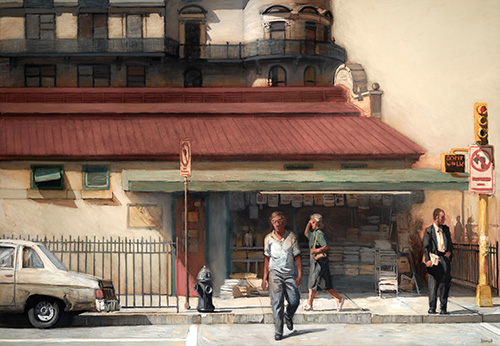
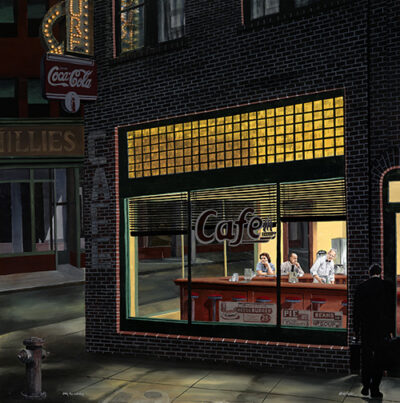
At the Hilbert Museum, this spirit of storytelling comes to life through California narrative art—works that capture the people, places and everyday experiences that have shaped the Golden State across generations. Whether depicting a bustling city street, a quiet harbor, a family home or a moment of everyday life, these works invite us to look closely and consider the stories unfolding before us.
One of the most compelling qualities of narrative art is its ability to connect people across places, cultures and backgrounds. Viewers may see the same work differently based on their own experiences, yet still recognize shared emotions and familiar themes. Joy, grief, fear, love and hope can transcend language and cultural boundaries. In looking closely, interpreting and responding to art, we encounter perspectives beyond our own and discover new ways of understanding the world around us.
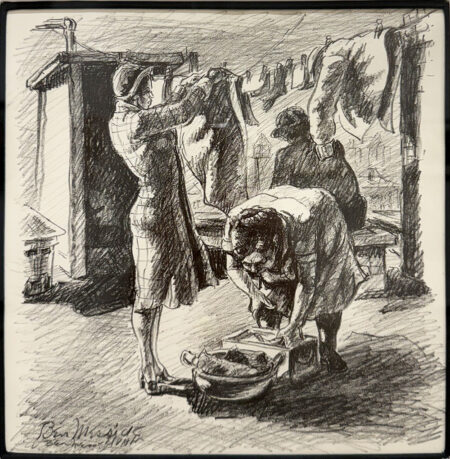
The History of Narrative Art: From Cave Paintings to Comic Books
Narrative art takes countless forms, with roots reaching back thousands of years to some of the earliest human civilizations. Rock carvings, cave paintings and hieroglyphs recorded important events, communicated beliefs and offered glimpses into daily life. These early images were more than decoration; they preserved knowledge, experiences and stories at a time when written language was not yet widely used.
Over time, the history of illustration and visual storytelling continued to evolve through hand-painted religious manuscripts, tapestries, sculptures, murals and detailed illustrations. The invention of the printing press expanded the reach of illustrated books, newspapers and magazines, allowing visual stories to reach broader audiences. Comic strips, graphic novels and comic books later brought images and text together to guide readers through characters, scenes and sequences of events.
Today, narrative art can be found in photography, film, animation, advertising, video games and digital media. While the tools and formats have changed, the impulse remains remarkably familiar: to use images to tell a story, communicate an idea or help viewers understand an experience.
From ancient cave walls to modern screens, visual storytelling continues to reflect the ways people record history, express creativity and connect with one another.
How Visual Storytelling Connects Us
Narrative artists use visual storytelling to communicate shared experiences, emotions and cultural ideas. A painting of a family gathered around a kitchen table, a crowded city street or a quiet harbor can evoke emotions and experiences that feel familiar even when the setting, culture or time period is not.
Narrative art can also be found throughout pop culture, from familiar characters and illustrations to film, animation and other forms of visual storytelling. These images can reflect individual perspectives as well as the shared experiences of a particular time and place. Pop culture has shaped the way we see identity, history, social trends and everyday life, often giving visual form to ideas that might otherwise be difficult to express.
Because images can communicate quickly and emotionally, visual storytelling can help audiences encounter unfamiliar perspectives while recognizing emotions and experiences that feel universal. Narrative art encourages empathy, sparks conversation and creates opportunities for connection—while offering the simple pleasure of discovering a story within a work of art.
The Future of Narrative Museums
Narrative museums offer unique opportunities to experience stories through art—to step into a place where a painting, illustration or other work can open a window into a particular time, place or human experience.
As museums continue to evolve, new technologies, broader perspectives and deeper community connections may create new ways for visitors to experience those stories. Emerging technologies such as virtual reality, for example, may allow visitors to step further into a story rather than simply view objects behind glass. Museums can also make space for diverse perspectives, community collaborations and stories that have historically been overlooked.
Together, technology, education and storytelling can help museums create experiences that feel increasingly personal, relevant and accessible. But the heart of the experience remains the same: looking closely, discovering connections and finding meaning in the people, places and stories represented through art.
At their best, narrative museums offer more than a collection of objects. They create opportunities to look at the world through another perspective and find connections through the stories art has to tell.